Previous

You have been told that you may need surgery, and the first thing you do is search for an alternative.
That is understandable. Most people don't want a hospital stay, a large surgical wound, or weeks away from work and family. When your doctor mentions laparoscopic surgery, it can sound reassuring—but you still want to know what it actually means for you.
The truth is simple: laparoscopic surgery can be an excellent option for many patients, but it isn't automatically the right choice for everyone.
The decision should begin with your medical problem, not with the technology.
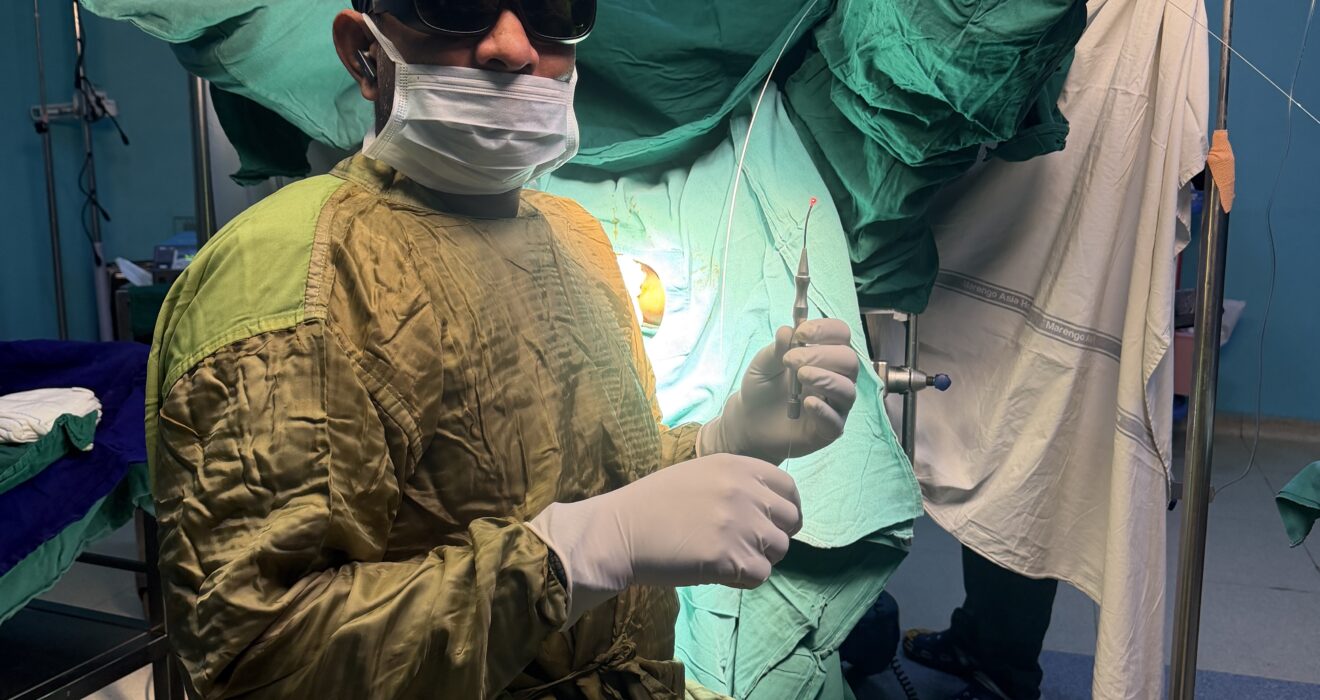
Laparoscopic surgery is a minimally invasive surgical technique.
Instead of making one large incision, the surgeon generally makes several small openings through which a camera and specialized instruments are introduced. The surgeon watches the procedure on a monitor while operating inside the abdomen.
Because the cuts are usually smaller than those used in traditional open surgery, patients may experience less wound discomfort and may return to normal activities sooner.
However, the exact recovery depends on the operation, your health, and whether any complications occur.
Laparoscopy is used for a wide range of surgical problems.
Gallstones can remain silent in some people, but they can also cause repeated attacks of abdominal pain, inflammation, or other complications.
When gallbladder removal is recommended, laparoscopic surgery is commonly considered because it allows the gallbladder to be removed through small incisions.
A hernia occurs when tissue pushes through a weak area in the abdominal wall.
Depending on the type of hernia and your medical history, laparoscopic repair may be an option. Your surgeon will consider factors such as the hernia's size, location, previous surgery, and symptoms.
Laparoscopic appendectomy is another commonly used minimally invasive procedure.
But appendicitis can become serious if treatment is delayed. Severe abdominal pain, fever, vomiting, or rapidly worsening symptoms require prompt medical evaluation.
Selected stomach, bowel, and other abdominal procedures can also be performed laparoscopically.
Whether this approach is appropriate depends on the exact diagnosis and the surgeon's assessment.
Often, but don't expect an identical recovery for every operation.
A simple laparoscopic procedure and a complex abdominal procedure are very different experiences.
Your recovery can be influenced by the length and complexity of surgery, your age, general health, previous operations, physical activity, and whether complications occur.
So when someone tells you that you'll be “back to normal in a few days,” ask what that means for your particular procedure.
Patients sometimes compare surgeons by asking how quickly they can perform an operation.
We think that is the wrong question.
The goal should not be the fastest surgery. The goal should be a safe, complete surgery performed by an experienced team.
Taking appropriate time to identify anatomy, control bleeding, and deal with unexpected findings is more important than finishing a procedure a few minutes sooner.
Imagine a working professional who has repeated gallstone attacks.
The pain usually settles after medication, so the patient keeps postponing treatment. Eventually, an evaluation confirms symptomatic gallstones, and laparoscopic gallbladder surgery is recommended.
The benefit in this situation isn't simply a smaller scar. Treating the underlying gallbladder problem can help prevent repeated attacks and reduce the chance of future gallstone-related complications.
That is how we encourage patients to think about surgery: what problem are we solving, and what happens if we don't solve it?
Minimally invasive surgical techniques are now widely used across different specialties.
According to the 2024 global survey from the International Federation for the Surgery of Obesity and Metabolic Disorders, more than 1.2 million metabolic and bariatric procedures were performed worldwide in 2023.
This statistic specifically relates to bariatric and metabolic surgery, not every type of laparoscopic procedure. Still, it reflects the scale at which minimally invasive approaches have become part of modern surgical practice.
If you are researching the Best Laparoscopic Surgery in Faridabad Sector 77, don't start with the hospital's promotional claims.
Start with the questions that affect your health.
Ask what happens if you don't have the operation.
For some conditions, monitoring may be reasonable. For others, delaying surgery may increase the risk of complications.
You should understand where your condition falls.
Ask your surgeon to explain the reason.
For many operations, laparoscopy may offer recovery advantages. But certain complicated cases may require an open approach or conversion to open surgery for safety.
Ask about the surgeon's experience with the exact procedure.
A surgeon who regularly performs laparoscopic gallbladder surgery, for example, may have a very different experience profile from someone who performs mainly other types of surgery.
Your surgeon will review your medical history, symptoms, previous operations, medications, and test results.
Depending on your condition, you may require blood tests, imaging, or other assessments before surgery.
You should also receive instructions about fasting, medications, smoking, food, and other preparation requirements where relevant.
If anything is unclear, ask before the day of surgery.
Most patients need some recovery time even after minimally invasive surgery.
You may experience mild abdominal discomfort, tiredness, bloating, or soreness around the incision sites.
Your surgeon will tell you when you can drive, return to work, exercise, lift heavy objects, and resume your usual diet. These instructions vary according to the procedure.
Do not compare your recovery with a friend who had a completely different operation.
Dr. Birbal Kumar is associated with laparoscopic and bariatric surgical care, with experience in minimally invasive procedures. His work reflects a patient-focused principle that is important when considering surgery: the procedure should be selected according to the diagnosis and individual circumstances, while proper evaluation, surgical expertise and postoperative follow-up remain essential.
Some abdominal symptoms should not wait for a routine appointment.
Sudden severe abdominal pain, persistent vomiting, high fever, fainting, significant abdominal swelling, or a painful hernia that cannot be pushed back may require urgent medical attention.
Do not try to diagnose these symptoms yourself or simply keep taking painkillers.
It depends on the procedure and how complicated the case is. A straightforward operation may be relatively short, while complex surgery can take considerably longer.
It depends on the operation and your job. Someone with desk-based work may return sooner than someone whose work involves lifting or physical activity. Your surgeon should provide procedure-specific guidance.
Yes. Laparoscopic surgery still involves incisions, although they are generally smaller than those used in traditional open surgery. The number and location of scars depend on the procedure.
Laparoscopic surgery can make a major difference for the right patient, but it should never be chosen simply because it sounds modern or promises a smaller scar.
Start by understanding your diagnosis. Find out whether surgery is necessary, whether laparoscopy is suitable, what alternatives exist, and what recovery will actually involve.
The Best Laparoscopic Surgery in Faridabad Sector 77 is not about making the smallest possible cut. It is about using the right surgical technique to solve the patient's problem safely and effectively.
If you have been advised to undergo abdominal surgery or are dealing with recurring symptoms, schedule a consultation with an experienced surgical team to understand whether laparoscopic treatment is appropriate for you.