Previous

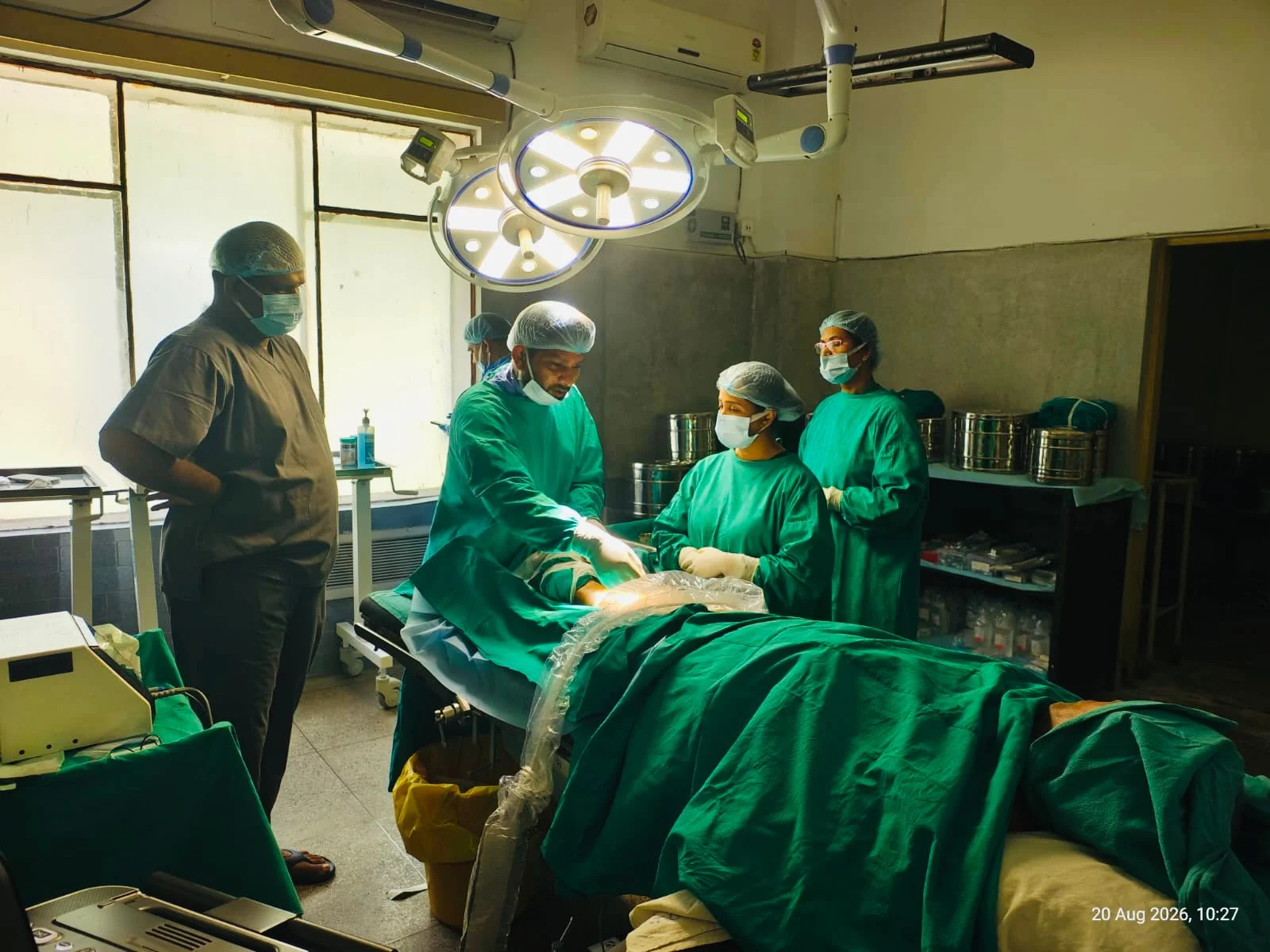
You have been dealing with abdominal pain for months. Some days it is manageable, while on other days it stops you from eating normally or doing your usual work.
Then a scan reveals gallstones, a hernia, or another problem that may need surgery. Your doctor mentions laparoscopic surgery, and suddenly you have another question: “Is this really better for me?”
That is exactly the question you should ask.
Laparoscopic surgery can offer important benefits for many patients, but it is not a magic solution and it is not suitable for every condition. The right choice depends on your diagnosis, health, the complexity of the procedure, and the surgeon's experience.
Laparoscopic surgery is a minimally invasive method of performing an operation through small cuts rather than one large incision.
A small camera is inserted through one of the openings, allowing the surgeon to see inside the abdomen. Special instruments are then used through other small openings to complete the procedure.
Compared with many traditional open operations, laparoscopic surgery may mean smaller wounds, less discomfort after surgery, shorter hospital stays, and a quicker return to normal activities.
But these are potential benefits—not promises.
Several common surgical problems can be treated using a laparoscopic approach.
Gallstones are one of the most common reasons patients undergo laparoscopic surgery.
If gallstones are causing repeated pain, inflammation, infection, or other complications, removing the gallbladder may be recommended.
The procedure is commonly performed laparoscopically, but your surgeon should first confirm that your symptoms are actually related to the gallbladder.
A hernia happens when tissue pushes through a weak area in the abdominal wall.
Some hernias can be monitored, while others require repair because of pain, increasing size, or the risk of complications.
For selected patients, laparoscopic hernia repair can provide a minimally invasive option. The best technique depends on the type and size of the hernia, previous operations, and your general health.
Appendicitis can sometimes be treated with laparoscopic appendectomy.
The surgeon removes the appendix through small incisions, usually with the help of a camera. However, complicated infection or other factors may affect the surgical approach.
This is why suspected appendicitis should be evaluated promptly rather than waiting to see whether the pain disappears.
Laparoscopic techniques are also used for selected gastrointestinal and abdominal procedures.
Whether they are appropriate depends on the specific condition and the patient's circumstances.
Patients usually ask about recovery first—and understandably so.
Because laparoscopic procedures generally use smaller incisions, patients may experience less wound discomfort and have smaller scars than with many open procedures.
Some patients can also return to normal activities sooner. Hospital stay may be shorter in appropriate cases.
However, recovery is individual. A complicated laparoscopic procedure can still require significant recovery time.
We would not tell every patient that.
The smallest incision is not always the most important goal.
A safe and complete operation matters more than whether the surgery is performed through three small cuts or one larger incision.
For example, severe infection, extensive scar tissue from previous operations, unusual anatomy, or other complications can sometimes make an open operation more appropriate.
A responsible surgeon should be prepared to change the plan when patient safety requires it.
We often see patients who have been living with recurring gallbladder pain but keep managing it with painkillers.
Imagine a patient whose ultrasound shows multiple gallstones and whose symptoms repeatedly occur after meals. After reviewing the symptoms and medical history, the surgeon determines that the gallbladder is the likely source of the problem and recommends laparoscopic gallbladder removal.
The important result is not simply that the operation was “laparoscopic.” The real benefit is addressing the underlying problem rather than repeatedly treating the symptoms.
The use of minimally invasive surgery has continued to grow worldwide.
A 2024 global survey from the International Federation for the Surgery of Obesity and Metabolic Disorders reported more than 1.2 million metabolic and bariatric procedures worldwide in 2023, many of which use minimally invasive techniques.
This reflects how established laparoscopic and other minimally invasive approaches have become. Still, popularity should never replace individual medical judgment.
If you are looking for the Best Laparoscopic Surgery in Faridabad, start by asking what problem the operation is supposed to solve.
A good consultation should cover your diagnosis, available treatment options, expected benefits, possible complications, recovery period, and what happens if the laparoscopic approach cannot safely be completed.
Experience matters.
Don't just ask whether a surgeon “does laparoscopic surgery.” Ask whether they regularly perform the particular procedure you need.
You should know whether medication, observation, conventional surgery, or another treatment could be appropriate.
There is nothing wrong with asking for a second opinion if you are uncertain.
A successful surgery involves more than the surgeon.
An experienced anesthesia team, appropriate hospital facilities, trained nursing staff, infection-control practices, and access to emergency support all matter.
Your surgeon will usually review your symptoms, medical history, medications, previous operations, and test results.
Depending on the procedure, blood tests, imaging, or other evaluations may be required.
You may also receive instructions about eating, drinking, medications, and preparation before the operation.
Do not hesitate to ask what you should and should not do before surgery.
Recovery depends heavily on the type of procedure.
Some patients return home quickly, while others need a longer hospital stay. You may have temporary abdominal discomfort, tiredness, or restrictions on lifting and strenuous activity.
Your surgeon should provide specific instructions based on the operation you underwent.
Most importantly, contact your medical team if you develop severe pain, persistent vomiting, high fever, breathing difficulty, wound problems, or other concerning symptoms after surgery.
Dr. Birbal Kumar is associated with laparoscopic and bariatric surgical care and works with minimally invasive surgical techniques for appropriate patients. His approach reflects a practical principle: laparoscopic surgery should be recommended after proper diagnosis and patient assessment, with safety and long-term outcomes taking priority over simply choosing the smallest possible incision.
For many suitable patients, laparoscopic surgery can offer smaller incisions, less wound discomfort, and potentially faster recovery. However, open surgery may be safer or more appropriate in certain complicated cases.
Recovery varies according to the procedure and your overall health. Some patients resume light activities within days, while more complex operations may require several weeks before full recovery.
Laparoscopic surgery is widely performed and can be safe for appropriate patients. However, every operation carries risks. Your surgeon should explain the specific risks and benefits of your procedure before surgery.
Laparoscopic surgery can be an excellent option when it is the right operation for the right patient.
But don't choose it simply because you have heard that “small cuts mean quick recovery.” The more important questions are whether you actually need surgery, whether laparoscopy is suitable for your condition, and whether the surgical team has the experience to manage unexpected problems.
The Best Laparoscopic Surgery in Faridabad is not about the most impressive technology or the smallest scar. It is about choosing a safe, appropriate treatment that addresses the actual medical problem.
If you have been advised to undergo abdominal surgery or are unsure whether a laparoscopic approach is suitable for you, schedule a consultation and discuss your diagnosis, alternatives, risks, and expected recovery with an experienced surgical team.