Previous

Imagine your doctor has just told you that you need surgery. You start researching your options and quickly come across terms like robotic surgery, laparoscopic surgery, and minimally invasive surgery.
Then comes the obvious question: “Do I really need robotic surgery, or is this just expensive technology?”
That is a fair question. Robotic surgery is not automatically better for every patient. The real benefit comes when the technology helps a trained surgeon perform a complex procedure with greater control and precision.
As surgical specialists, we believe patients should understand why robotic surgery is being recommended, not simply accept it because it sounds more advanced.
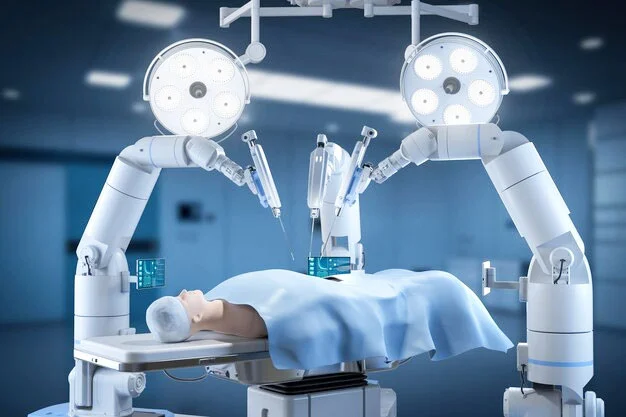
Robotic surgery is a type of minimally invasive surgery in which the surgeon controls specialized robotic instruments from a console.
The robot does not operate independently. The surgeon remains in control throughout the procedure. The system helps translate the surgeon's hand movements into precise movements of small instruments inside the body.
Depending on the procedure, robotic systems can offer a magnified three-dimensional view and improved instrument movement in tight or difficult areas.
That can be particularly useful when surgery involves delicate structures or requires very precise dissection.
Not every patient needs robotic surgery. It becomes more useful when the complexity of the procedure makes enhanced visualization, movement, or control valuable.
Some hernias are straightforward to repair, while others are more complicated.
Large hernias, recurrent hernias, or abdominal wall problems can sometimes require careful reconstruction. In selected cases, robotic techniques may give the surgeon additional control when working in confined spaces.
Certain bowel and gastrointestinal procedures involve operating around important blood vessels and other structures.
For carefully selected patients, robotic assistance may help with precise dissection and suturing. However, the surgeon's experience with the specific operation remains more important than the machine itself.
Some operations involve narrow spaces where conventional instruments can be difficult to maneuver.
This is one area where robotic systems can have a practical advantage. The instruments are designed to provide controlled movement that can be useful during technically demanding procedures.
Potentially, but patients should be careful with blanket promises.
Robotic surgery is generally performed through small incisions, similar to other minimally invasive approaches. Smaller incisions can contribute to less wound discomfort and quicker recovery for suitable procedures.
But your recovery depends on much more than the size of the incision. The operation performed, your general health, complications, pain management, and how your body heals all matter.
Here is the point we often explain to patients:
The robot is not the surgeon.
Buying or using sophisticated equipment does not automatically make someone an excellent robotic surgeon.
If you are looking for the Best Robotic Surgeon in Faridabad Sector 78, don't make the robot your first selection criterion. Start by asking about the surgeon's training and experience with the exact procedure you need.
A surgeon who has performed many relevant operations and knows when not to use the robot can be a better choice than someone who simply promotes robotic technology heavily.
Suppose a patient has a recurrent hernia after an earlier repair. A basic repair may no longer be the best approach because scar tissue and altered anatomy can make the operation more challenging.
After reviewing the patient's scans and surgical history, the surgeon may recommend a robotic approach because the enhanced instrument control could help with precise dissection and reconstruction.
The important point is that the robotic approach is selected because of the patient's surgical problem—not because robotic surgery is fashionable.
Robotic surgery has continued to expand rapidly. Intuitive Surgical, one of the major companies in the field, reported that its worldwide installed base of da Vinci systems reached more than 10,000 systems by the end of 2024, reflecting the growing use of robotic-assisted surgery globally.
But growing adoption should not be confused with universal necessity.
More technology means more options. It does not mean every patient needs the most technologically advanced option available.
Instead of asking only, “Who is the best?”, ask better questions.
How many robotic procedures has the surgeon performed?
More importantly, how many of your particular procedure have they performed using robotic assistance?
Experience should be relevant to your problem.
A good surgeon should be able to explain the expected benefit in plain language.
If the answer is simply “because robotic surgery is more advanced,” ask for more detail.
You should understand whether laparoscopic surgery, conventional surgery, medication, observation, or another treatment could also work.
The right surgeon will discuss alternatives rather than making you feel that one technology is your only option.
Surgery is not just about the person holding the instruments.
Ask about the hospital's surgical team, anesthesia support, intensive care facilities when required, infection-control standards, and ability to manage complications.
Both are minimally invasive approaches, but they are not identical.
In conventional laparoscopy, the surgeon directly controls long instruments while viewing the operation through a camera. In robotic surgery, the surgeon controls robotic instruments from a console.
For some operations, there may be little practical difference for the patient. For technically demanding procedures, robotic assistance may offer useful advantages.
The best approach is procedure-dependent.
Dr. Birbal Kumar is an experienced surgeon associated with laparoscopic and bariatric surgical care. His work reflects an important principle in modern surgery: technology should be chosen according to the patient's condition, while careful diagnosis, surgical experience and proper follow-up remain central to achieving a good outcome.
Before agreeing to robotic surgery, take a few minutes to ask:
What exactly needs to be treated?
Why do I need surgery?
Why robotic surgery instead of laparoscopy or open surgery?
What are the possible complications?
How experienced are you with this specific procedure?
What will recovery involve?
What happens if robotic surgery cannot be completed as planned?
What are my non-surgical alternatives?
These questions are not challenging your surgeon. They are part of making an informed medical decision.
Not always. Robotic surgery may provide advantages for certain complex procedures, but laparoscopic surgery can be equally appropriate for many operations. The choice depends on the patient's condition and the surgeon's expertise.
Robotic surgery is widely used and can be safe when performed on suitable patients by appropriately trained surgical teams. Like every operation, it carries risks, so your surgeon should explain the benefits and possible complications beforehand.
It can cost more than conventional or laparoscopic surgery because of the technology and associated hospital expenses. Patients should ask for a complete estimate and understand what clinical benefit the robotic approach is expected to provide.
Robotic surgery can be an excellent tool—but it should remain a tool, not the reason you choose surgery.
If you have been advised to undergo an operation, focus first on the diagnosis and the surgeon's experience. Then ask whether robotic assistance offers a meaningful advantage in your specific case.
The Best Robotic Surgeon in Faridabad Sector 78 for you should be someone who can explain the technology clearly, discuss alternatives honestly, and recommend robotic surgery only when it makes clinical sense.
If you have been advised to undergo complex surgery or want a second opinion about whether robotic surgery is right for you, schedule a consultation and discuss your diagnosis, treatment options, expected benefits, and recovery plan with an experienced surgeon.