Previous
Next

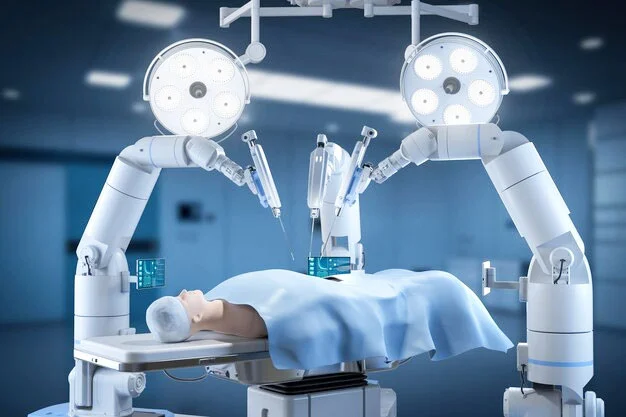
A patient recently walked into our clinic with a question that has become increasingly common.
"Doctor, does a robot perform the surgery on its own?"
It's a fair question.
With so much information online, many people imagine robotic surgery as a machine operating independently while the surgeon watches from across the room.
The reality is very different.
Robotic surgery is performed by an experienced surgeon who controls advanced robotic instruments with exceptional precision. The technology enhances the surgeon's abilities—it does not replace them.
If you're searching for the Best Robotic Surgeon in Faridabad Sector 78, understanding how robotic surgery works and when it may be beneficial can help you make a more informed healthcare decision.
Ten years ago, most patients asked whether surgery was necessary.
Today, many patients ask what type of surgery is best.
That's progress.
People are becoming more informed about treatment options and recovery outcomes.
They want to know:
Will recovery be faster?
Will there be less pain?
How large will the incisions be?
Can complications be minimized?
These are exactly the reasons robotic-assisted surgery continues to gain attention worldwide.
Robotic surgery is a form of advanced minimally invasive surgery.
During the procedure, the surgeon controls robotic instruments through a specialized console.
The system provides:
Enhanced precision
Improved visualization
Greater flexibility
Better access to difficult surgical areas
Most importantly, every movement remains under the surgeon's complete control.
The robot never makes decisions independently.
Not every procedure requires robotic technology.
However, certain conditions can benefit significantly from this advanced approach.
Complex hernia cases may benefit from enhanced surgical precision.
Many digestive system surgeries can be performed using robotic techniques.
Robotic systems are increasingly used in selected cancer surgeries to support precise tissue handling.
Weight-loss procedures often benefit from minimally invasive surgical approaches.
Some technically demanding operations become easier through robotic assistance.
Many people assume newer technology automatically means better outcomes.
That isn't always true.
The technology matters.
But the surgeon matters more.
A highly skilled surgeon using the right technique for the right patient will always be more important than any machine.
When choosing a robotic surgeon, experience, training, judgment, and patient care should remain top priorities.
The adoption of robotic-assisted surgery continues to expand globally.
Healthcare providers increasingly invest in robotic systems because they can support minimally invasive procedures with greater precision and control.
For patients, potential benefits often include:
Smaller incisions
Reduced blood loss
Less postoperative discomfort
Faster recovery
Shorter hospital stays
Improved cosmetic outcomes
However, suitability depends on the individual patient and medical condition.
When facing surgery, confidence in your surgeon matters more than anything else.
Patients choose Dr. Birbal Kumar because of his commitment to patient education, advanced surgical techniques, and personalized treatment planning.
We believe every patient deserves a clear explanation of:
Their diagnosis
Available treatment options
Benefits and risks
Expected recovery timeline
Good surgical care starts with informed decision-making.
One patient with a complex abdominal condition delayed treatment because he feared a lengthy recovery.
His job required physical activity, and he worried about being away from work for an extended period.
After undergoing robotic-assisted surgery and following the recommended recovery plan, he returned to many of his daily activities sooner than expected.
At his follow-up appointment, he shared:
"My biggest mistake was assuming surgery would be harder than the actual condition."
That's a lesson many patients learn only after receiving treatment.
Every surgical approach has its place.
The best option depends on the patient—not the technology.
Larger incision
Direct access to surgical area
Appropriate for certain complex cases
Small incisions
Faster recovery
Widely used for many procedures
Advanced minimally invasive technique
Enhanced precision
Improved visualization
Greater instrument flexibility
A qualified surgeon helps determine which option is most appropriate.
Comprehensive surgical care often includes multiple specialties.
Advanced minimally invasive procedures
Precision-assisted operations
Gallbladder surgery
Hernia repair
Appendix surgery
Surgical weight management
Metabolic health improvement
Smaller incisions
Faster recovery pathways
Benign and cancer-related breast conditions
Comprehensive gastrointestinal cancer treatment
You don't need to decide on surgery alone.
The purpose of a consultation is to understand your options.
A specialist can explain:
Whether surgery is necessary
Whether robotic surgery is appropriate
Alternative treatment approaches
Recovery expectations
Knowledge helps patients make better decisions.
No. The surgeon remains in complete control throughout the procedure.
Patients often experience less postoperative discomfort compared with some traditional surgical approaches, though experiences vary.
No. Suitability depends on the medical condition, overall health, and surgical goals.
The goal of robotic surgery is not to use technology for its own sake.
The goal is to improve patient outcomes through precision, safety, and faster recovery whenever appropriate.
If you're looking for the Best Robotic Surgeon in Faridabad Sector 78, schedule a consultation with Dr. Birbal Kumar to learn whether robotic-assisted surgery may be the right treatment option for your condition and long-term health goals.